Prepaid eSIM Plans Explained: How They Work and Why You Need One
Prepaid eSIM is a fully digital alternative to a physical SIM card, allowing you to activate a mobile plan without inserting any plastic. It works by downloading a carrier profile directly onto a compatible smartphone, which then connects to the cellular network as soon as the prepaid credit is applied. This eliminates the need to wait for delivery or visit a store, offering instant connectivity and the flexibility to switch data plans without swapping cards.
How to Choose a Credit-Free Digital SIM
To choose a credit-free prepaid eSIM, prioritize providers that offer zero-deposit activation and pay-as-you-go data. Look for plans with no linked credit card or subscription requirement. Select a plan with a dedicated digital wallet or top-up balance, not postpaid billing. Verify the eSIM provides instant activation without a credit check. Focus on packages with clear, upfront costs for data, calls, and SMS. Ensure the app interface lets you easily manage your account and refill with vouchers or mobile money. This approach guarantees full control and no surprise charges.
Key Factors When Shopping for Pay-As-You-Go eSIMs
When shopping for pay-as-you-go eSIMs, focus first on top-up flexibility and expiry policies. Check if unused data rolls over or if the account resets on a fixed date. Evaluate coverage maps for your specific destinations, as network partners vary. List pricing tiers clearly:
- Compare per-gigabyte rates across providers.
- Verify if recharging extends the same plan or forces a new package.
- Confirm you can monitor balance in-app without automatic renewal.
Prioritize plans that let you pause service between top-ups, avoiding forced monthly cycles.
Coverage Maps: What to Check Before You Pay
Before purchasing a prepaid eSIM, scrutinize the provider’s coverage map for the specific regions you will visit. A map showing broad national color is insufficient; zoom into towns, transit routes, and rural zones where coverage map accuracy often fails. Cross-reference the provider’s claimed partner networks with independent user reports on sites like CellMapper or OpenSignal. Pay close attention to whether the map differentiates between 4G, 5G, and fallback 3G layers, as many cheap plans throttle speeds severely on secondary bands. Ignoring these granular details can leave you without service precisely where you need it most.
Always zoom into your specific travel routes and verify partner network details; a colorful national map alone is a red flag for prepaid eSIM reliability.
Data Caps vs. Unlimited Plans: Finding the Sweet Spot
When choosing a prepaid eSIM, deciding between data caps and unlimited plans hinges on your usage patterns. For heavy streaming or tethering, a cap-free plan prevents throttling, but you must check the fair usage policy for soft limits. Conversely, capped plans offer predictable speeds, ideal for light browsing or trips under two weeks. To find your sweet spot, follow this sequence:
- Audit your average monthly data consumption using your phone’s settings.
- Check if the “unlimited” plan drops to 2G or 3G speeds after a threshold—often 5–10 GB.
- Compare cost-per-gigabyte: a $30 plan with 20 GB may outperform a $50 “unlimited” one that throttles past 10 GB.
For most short-term travelers, a high-cap capped plan beats bogus unlimited offers that degrade in hours.
Recharge Without a Contract: Flexibility Explained
With a prepaid eSIM, recharge without a contract puts you in total control. You only pay for data when you need it, adding a top-up for a few days or a month as your schedule demands. This flexibility explained means you can easily switch between plans—like moving from a travel pack to a local data option—without penalties or long-term commitments. If your needs change, you simply select a new eSIM or plan from the provider’s app. There is no credit check, no hidden fees, and no service cancellation process. Just instant activation, direct payment, and the freedom to pause or change your connectivity at any moment.
Topping Up Your Account Without Hidden Fees
Topping up your prepaid eSIM account without hidden fees requires selecting providers that advertise transparent pricing during reloads. Look for options where the exact amount you pay enters your balance, without added service charges, taxes, or processing fees. Reloads should be completed directly through the provider’s app or website, avoiding third-party platforms that might impose surcharges. Always confirm the final charge before confirming payment; if it exceeds the listed top-up amount, that fee is hidden. How can I verify a top-up has no hidden fees? Before finalizing, check the receipt or confirmation screen for any discrepancy between the amount paid and the balance added—if they match, you are clear.

Rollover Data and Expiration Policies to Watch For
When choosing a prepaid eSIM, scrutinize rollover data expiration windows to avoid losing unused gigabytes. Some providers let unused data roll over indefinitely only if you manually renew before the plan’s exact expiration time, while others cap rolled-over data at a set limit or expire it after 30 days. A trap exists where automatic renewal resets the rollover count unless you turn off auto-renew. Watch for policies that delete accumulated data if you pause service or switch plans mid-cycle.
- Check if rolled-over data expires after a fixed period (e.g., 30 days) or with the next plan renewal.
- Confirm whether manual renewal preserves rollover data better than auto-renewal.
- Note any maximum cap on total rollover data you can hold at once.
- Ensure data is not forfeited when you change to a different plan on the same eSIM.
Multi-Country Passes for Frequent Travelers
For frequent travelers, multi-country passes bundle prepaid eSIM data across several nations into a single purchase, eliminating the need to swap profiles at each border. These passes typically cover contiguous regions like Europe or Asia, offering a set data allowance valid for a fixed duration such as 30 days. You should verify each pass’s exact country list, as coverage may omit certain territories within the stated region. The cost per gigabyte is often lower than buying separate single-country eSIMs, but unused data usually expires when the pass ends. Multi-country passes for frequent travelers thus provide streamlined connectivity for predictable, multi-stop itineraries without recurring administrative tasks.
Multi-country passes let frequent travelers activate one prepaid eSIM for seamless data across many countries, saving time and simplifying cost for regular cross-border trips.
Activation Steps That Don’t Require ID
For a prepaid eSIM, activation without ID usually means you just buy the plan online, then scan a QR code from your email. Your phone does the heavy lifting—go to Settings, tap “Add Cellular Plan,” and scan away. If the QR code doesn’t scan, manually enter the activation code provided instead. You’ll typically connect to Wi-Fi during setup to download the eSIM profile. Some providers let you activate directly from their app without ever entering your name, though you may still need to provide a payment method. After the profile installs, toggle the new line on—no ID, no passport photo needed.
Scanning a QR Code to Go Live Instantly
After completing a contactless purchase, instant QR code activation removes the need for ID input entirely. This method triggers the eSIM profile to download directly to your device within seconds, relying solely on the device’s camera to parse the embedded activation token. No manual entry of a long SM-DP+ address or confirmation code is required, as the QR scan injects all provisioning data in one operation. Once scanned, your prepaid eSIM registers to the network automatically, converting a dormant plan into live service immediately, eliminating any verification delays.
Scanning a QR code activates your prepaid eSIM without ID, embedding provisioning data in one instant action.
Managing Multiple Profiles on One Phone
Managing multiple eSIM profiles on one phone allows you to switch between prepaid data plans without swapping physical SIMs. Each profile stores a separate carrier configuration, so you can install a local data plan while keeping your primary number active. The phone’s settings menu enables you to label each profile (e.g., “Travel,” “Work”) and select a default for data or calls. Dual-SIM dual-standby functionality ensures both profiles remain reachable simultaneously, though only one provides data at a time. To avoid conflicts, deactivate unused profiles when not needed.
- Install multiple prepaid eSIMs directly via QR codes or carrier apps, storing each as a distinct profile.
- Assign a default line for mobile data and another for voice to control which profile handles specific tasks.
- Toggle profiles on or off individually to prevent accidental data charges or conflicts.
- Reboot the phone after adding new profiles to ensure network registration is properly synced.
Switching Between Plans Mid-Trip
Switching between plans mid-trip with a prepaid eSIM is instantly doable from your device’s settings. You can layer a new data package on top of an existing one without needing ID, but you must toggle which eSIM line is active for cellular data. Mastering plan switching mid-trip means understanding that unused credit on a previous plan often expires—so sequence your purchases wisely. Some providers lock your speed tiers, meaning a cheaper plan can’t be topped up to the faster one you already used.
Q: Can I switch plans while traveling without losing my original eSIM barcode?
A: Yes, switching plans does not delete your eSIM profile; you simply buy and activate a new data package from the provider’s app or website.
Global Roaming Without Postpaid Shock
With a prepaid eSIM, you achieve global roaming without the dreaded postpaid bill shock. You buy a data package for your destination upfront, paying a fixed rate that eliminates surprise charges from your home carrier. Because the eSIM is separate from your primary line, you can disable costly cellular data leakage from your main number entirely. This ensures you control exactly how much you spend on roaming data, with zero risk of consuming expensive, unbilled usage. A prepaid eSIM lets you travel confidently, knowing your connectivity costs are locked in before you even board the plane.
Regional Bundles for Europe, Asia, and the Americas
Regional Bundles for Europe, Asia, and the Americas let you hop between countries without swapping SIMs or fearing fees. A single European pass covers trains from Paris to Prague, while an Asian bundle connects Singapore, Thailand, and Japan seamlessly. The Americas package unifies Canada, the US, and Brazil under one data pool. Data caps often vary by region, so check if your European 10GB plan runs slower in Switzerland than in Spain. Activation is instant via a QR code, topping up only when needed. You pay once for a continent, not per passport stamp.
| Region | Typical Countries Included | Common Data Range |
|---|---|---|
| Europe | 30–40 countries (EU + UK) | 1GB–20GB |
| Asia | 10–15 countries (SEA + Japan/Korea) | 1GB–15GB |
| Americas | 5–8 countries (US, Canada, LATAM) | 1GB–10GB |
Avoiding High Per-Megabyte Charges Abroad
The primary advantage of a prepaid eSIM for avoiding high per-megabyte charges abroad is upfront cost certainty. Instead of paying postpaid rates that often exceed €10 per MB, you pre-purchase a fixed data package—for example, 5 GB for €20—ensuring the cost per megabyte is locked at a flat rate. To further prevent overage, disable background app refresh and automatic updates before leaving, and use a data tracker widget to monitor consumption against your plan limit. If you exhaust your allowance, most providers allow instant top-ups directly from the eSIM app, avoiding any surprise carrier billing.
Q: How do I protect against accidental high per-megabyte charges when my prepaid eSIM data runs out?
A: Most prepaid eSIM providers automatically cut off data at your plan’s limit, preventing any overage; you then manually purchase a new top-up to resume usage, ensuring you never face postpaid-style per-megabyte rates.
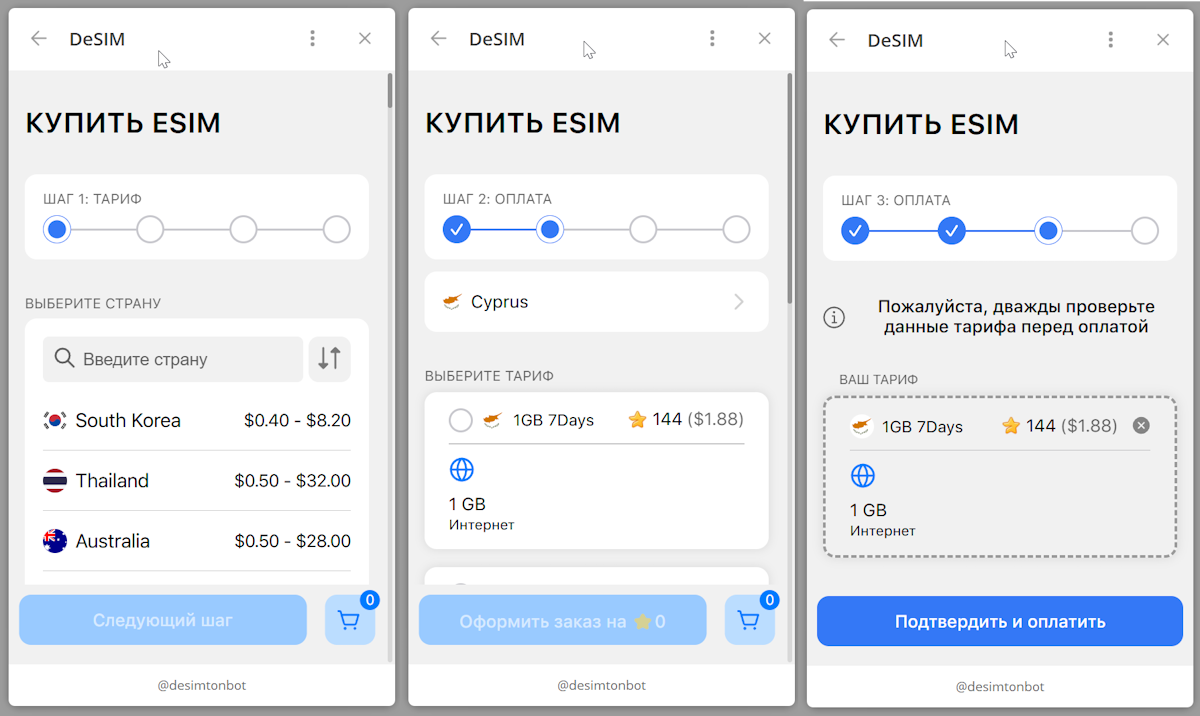
Local Numbers vs. Data-Only Options
When choosing a prepaid eSIM for global roaming, the core distinction is between a data-only plan and one that includes a local number. A local virtual number vs no voice decision affects how you manage two-factor authentication (2FA) and local calls. Data-only eSIMs are cheaper and simpler, but they cannot receive SMS from banks or ride-hailing apps that require a local number. Conversely, a local number enables local voice calls and SMS reception, though it typically costs more and may need identity verification. The trade-off is logistical: data-only requires relying on your home number over Wi-Fi calling, while a local number keeps you fully reachable.
- Data-only eSIMs block SMS-based 2FA from local services.
- Local numbers allow native voice calls to local businesses.
- Data-only is plug-and-play, whereas local numbers often require registration.
- Local numbers can receive calls from local contacts without long-distance fees.
Best Use Cases for Non-Committed Mobile Service
Non-committed mobile service via a prepaid eSIM is best for short-term travel, allowing instant data access upon arrival without a local contract. It also suits users who need a secondary, temporary number for project-based work or online verification without altering their primary plan. Q: When is a prepaid eSIM better than a contract plan for data? A: For trips under 30 days, where paying only for needed data avoids monthly fees. Additionally, it serves as a practical backup for network outages or a separate line for device testing, with no cancellation penalties.
Short-Term Stays and Business Trips
For short-term business trips, a prepaid eSIM eliminates the need for a local physical SIM, allowing immediate connectivity upon arrival at the airport or meeting venue. Users avoid roaming contracts and monthly fees by selecting a data package aligned with their exact trip duration, whether for a two-day conference or a week-long client visit. The eSIM can be installed before departure, ensuring seamless access to navigation, emails, and ride-hailing apps from the moment the plane lands. This approach prevents unexpected charges from frequent multi-country travel while maintaining a single device for work.

- Activate a 3-day or 7-day data pack before flying to match conference dates.
- Top up the same eSIM profile if a meeting extends unexpectedly.
- Switch to a local eSIM for each new country without changing the primary SIM.
- Keep the prepaid eSIM as a backup data line during short layovers.
Backup Connectivity for Emergency Situations
For emergency situations, a prepaid eSIM provides instant backup connectivity without requiring a long-term contract or physical SIM swap. When your primary carrier’s network fails due to natural disasters or coverage gaps, you can download a new eSIM profile in seconds via Wi-Fi or a secondary device. This ensures immediate access to emergency services, critical navigation, and communication channels. The non-committed nature means you only pay Singapore eSIM for data when activated, making it a cost-efficient safety net. Keep a zero-balance prepaid eSIM on standby; top up only when needed to avoid wasted credit. Prioritize eSIMs that support network roaming across multiple local carriers for maximum resilience.
Budget Travelers and Digital Nomads
For budget travelers and digital nomads, a prepaid eSIM is a game-changer for maintaining connectivity without long-term contracts or high roaming fees. You can easily switch between local data plans as you hop countries, avoiding physical SIM swaps or expensive monthly commitments. This keeps your remote work and travel budget tight, whether you’re couch-surfing in Thailand or working from a cafe in Colombia. Since plans are non-committed, you only pay for the data you use for work and navigation, with no surprise bills.
- Choose short-term, country-specific data packs to avoid paying for unused days.
- Instantly top up cheap data when you arrive in a new destination, skipping retail stores.
- Keep your home number active for banking while using separate travel data.
- Easily share your hotspot with fellow nomads, splitting costs without shared contracts.

Device Compatibility and Technical Gotchas
When you buy a prepaid eSIM overseas, your phone needs to be carrier-unlocked—a fact many travelers discover only after a bewildering airport activation failure. Even unlocked devices can fail if the eSIM profile requires a specific network frequency band that your phone lacks, like a Japanese prepaid eSIM needing B18, which older US iPhones skip. Your eSIM’s “profiles” menu might vanish after a system update, trapping you without service mid-trip. Some prepaid eSIMs also refuse to work on dual-SIM phones unless you manually disable the physical SIM’s data roaming, creating a silent loop. Always verify your exact model’s IMEI on the provider’s compatibility checker before departure—otherwise, that $10 prepaid eSIM becomes a paperweight.
Checking If Your Phone Locks or Unlocks
Before purchasing a prepaid eSIM, you must confirm your device is carrier-unlocked. A locked phone will reject any eSIM from a different provider. To check, navigate to Settings > General > About (iOS) or Settings > About Phone (Android). View the “Carrier Lock” entry. If it says “No SIM restrictions,” your phone is unlocked. If locked, contact your current carrier for an unlock code. eSIM carrier lock validation prevents wasted purchases. Follow this sequence:
- Go to your device’s Settings menu.
- Access the “About” section.
- Read the Carrier Lock indicator.
- Proceed only if it confirms no restrictions.
Dual SIM Operations: Physical Card and Digital Line
When using a prepaid eSIM alongside a physical SIM, the device must support dual SIM dual standby (DSDS) to manage both profiles simultaneously. A common gotcha is that only one line can handle mobile data at a time; you must manually assign which SIM—physical or eSIM—acts as the default data line. While one card is on a call, the other often loses network access, though some phones allow call forwarding between lines. Additionally, SMS and voice services are tied to their respective SIM, so you cannot merge contacts or messages across both lines natively.
- Activate DSDS in settings to avoid one SIM sleeping when the other is in use.
- Designate the primary data line carefully, as switching data mid-session may disrupt active downloads.
- Check if your device supports parallel use of eSIM and physical SIM without disabling one slot permanently.
Wi-Fi Calling with a Balance-Based Account
Wi-Fi Calling with a balance-based prepaid eSIM introduces a specific friction: the feature only activates if your account holds sufficient funds, even for calls routed over Wi-Fi. Unlike postpaid plans, a zero-balance state blocks Wi-Fi calling entirely, meaning you cannot place an emergency call or receive texts via Wi-Fi without credit. This is a critical balance-dependent connectivity trap to verify before travel.
Does Wi-Fi Calling consume my prepaid eSIM balance?
Yes, outgoing Wi-Fi calls deduct airtime rates from your balance based on your home zone, not your physical location. However, incoming Wi-Fi calls are typically free with a prepaid eSIM, provided your balance is not zero.
Saving Money: Comparing Top Providers Side by Side
When you line up top prepaid eSIM providers side by side, the real money-saving trick is comparing their daily vs. long-term data rates. For a 7-day trip, Airalo often beats Holafly on price for smaller data packs, while Ubigi can win for 30-day plans in Europe. Quick Q&A: “How do I choose the cheapest prepaid eSIM?” Check the per-GB cost for your exact trip length—a 1GB pack might be $4.50 from one provider but $3 from another offering a 3GB plan instead. Don’t forget to factor in activation fees, which vary by provider and can eat your savings if you switch mid-trip.
Price Per Gigabyte Across Popular Brands
When comparing prepaid eSIM providers, price per gigabyte varies sharply by brand. Airalo often charges $4.50–$12.00 per GB for regional packs, whereas local-centric brands like Holafly or Ubigi can drop below $3.00 per GB on country-specific plans. To maximize value, follow this sequence: first, identify your destination and data need; second, check price per gigabyte benchmarks for each brand’s local versus global pack; third, divide the total plan cost by data allowance. This reveals that a 1 GB regional pack from one provider may cost the same as 5 GB from a local specialist.
- Calculate total cost ÷ total GB for each brand’s plan.
- Compare local-brand packs (often ≤$2/GB) against global roamer packs (often ≥$5/GB).
- Select the plan with the lowest price per gigabyte that meets your coverage needs.
Referral Bonuses and First-Time Discounts
When comparing prepaid eSIM providers, examine their referral bonus structures and first-time discounts directly. Some operators offer a flat credit, like $5, for each successful referral, while others provide a percentage of the referee’s first top-up. First-time discounts often appear as a promotional code for a 20% reduction on the initial data pack. Stacking a referral link with a new-user coupon can yield the lowest effective rate for your first trip. Always verify whether the discount applies to the base plan or only to add-ons, as this varies sharply by brand.
Free Trials and Money-Back Guarantees
When comparing top prepaid eSIM providers, evaluating their risk-free trial periods is critical to avoiding wasted spend. Some offer a limited free trial, often data-only for 24–48 hours, allowing you to test network coverage before committing. Money-back guarantees vary but typically require a refund request within 7–14 days of purchase, provided minimal data (e.g., under 100 MB) was used. Prioritize providers that clearly define refund triggers—such as “no usage” versus “unused data only”—to avoid disputes.
- Check the exact data cap that voids a money-back guarantee.
- Confirm whether free trials include tethering or are restricted to phone use.
- Note if the refund is credited to your account or returned to your original payment method.